
There’s a tendency, when planning a golf trip to Scotland, to start and end the conversation at St Andrews. It’s understandable — the Old Course carries a weight of history that’s hard to argue with. But Scotland’s links landscape extends well beyond Fife, and for many seasoned golfers, the courses that lie further north, south, and east offer a more complete picture of what Scottish links golf actually is. Avid golfers considering a Scotland golf tour in 2027 must read this helpful article.
Ayrshire, the Highlands, Aberdeenshire, and East Lothian together form a circuit of venues that includes some of the most historically significant and technically demanding courses anywhere in the world. Travelling between them — properly, over two weeks — reveals a country whose golfing heritage runs much deeper than any single town or championship venue.
Ayrshire: Where The Open Championship Began
Scotland’s west coast is where competitive golf as we know it took root. Prestwick Golf Club hosted the first twelve Open Championships. Its layout — blind shots, cross bunkers, stone walls, unpredictable wind — remains unlike anything else in golf. It rewards course knowledge and imagination above all else.
Royal Troon sits a few miles up the coast and occupies a very different place in the game. It’s a demanding, modern Open Championship venue. Defined by narrow fairways, deep revetted bunkers, and a closing stretch that has ended many a title challenge. The par-3 8th — the Postage Stamp — is one of the most replicated holes in golf design for good reason.
Dundonald Links, a former Scottish Open host, rounds out the Ayrshire section of the itinerary. It’s a modern counterpoint to the traditional layouts nearby: immaculate conditioning, strategic bunkering, and generous fairways that offer a different kind of challenge.
The Scottish Highlands: Golf at Its Most Remote
The journey north to Sutherland is one of the more rewarding transitions in golf travel. The landscape changes dramatically as you leave central Scotland behind, and by the time you reach Dornoch, the scale of what you’re about to play starts to become clear.
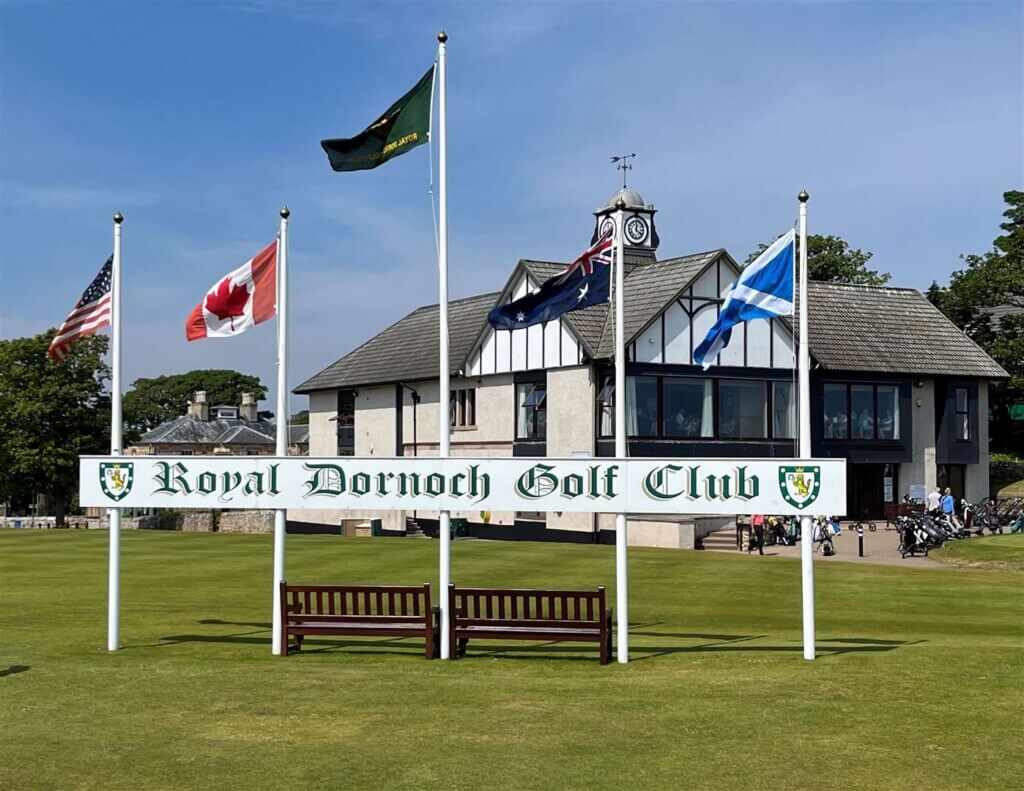
Royal Dornoch is regularly listed among the world’s top courses, and its reputation is well-founded. The Championship Course runs along natural coastal contours with elevated greens, subtle breaks, and wind conditions that shift throughout the round. It’s a course that doesn’t announce itself loudly — it simply demands that you think, and rewards those who do.
Brora, further up the coast along the Moray Firth, is a different experience entirely. Natural turf, timeless design, and a routing that still shares its fairways with local livestock. It’s one of the most enjoyable traditional links rounds in the country, and deliberately unhurried.
Aberdeenshire: Links Golf Along the North Sea
Scotland’s northeast coastline produces two very different links experiences, both outstanding in their own right.
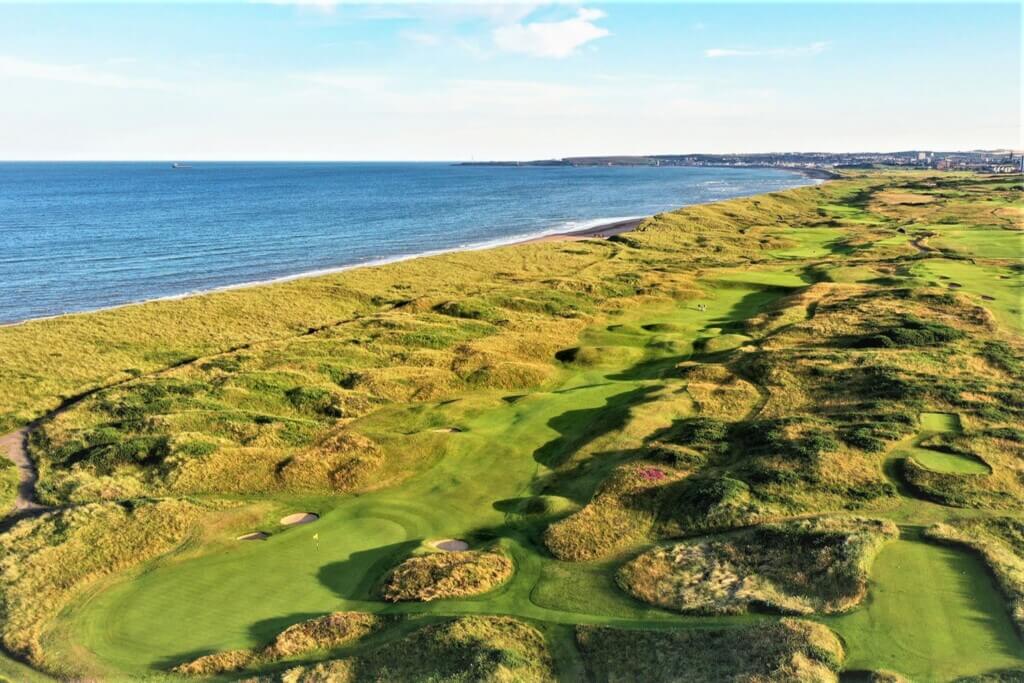
Cruden Bay is visually dramatic — towering dunes, bold routing, and greens tucked into natural landforms along the North Sea. It demands creativity off the tee and patience on approach. The views from the elevated holes are some of the most striking in Scottish golf.
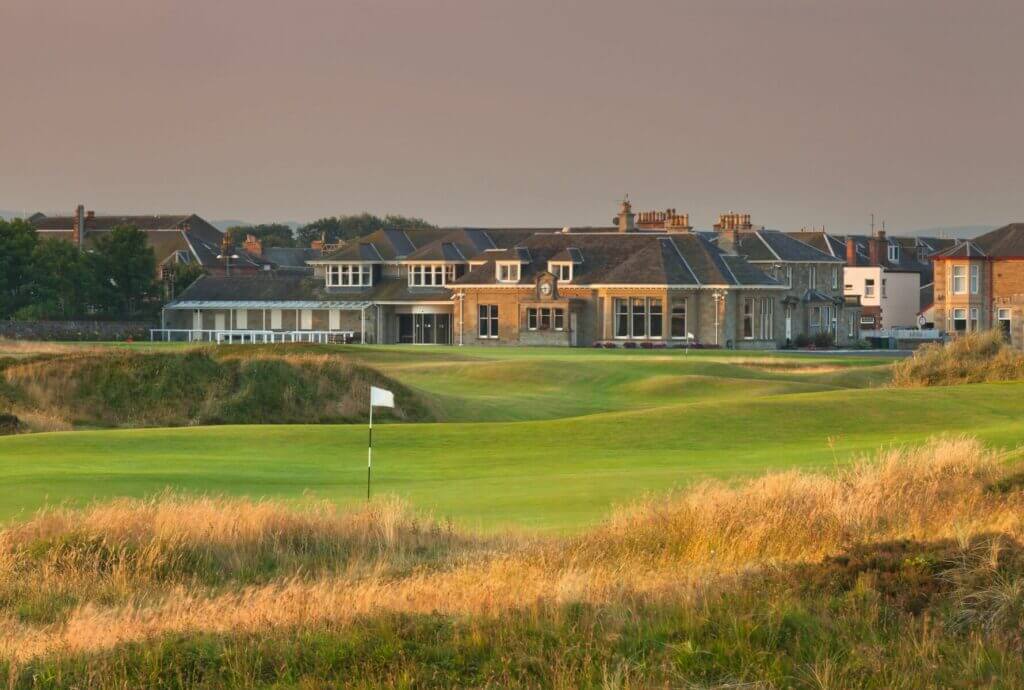
Royal Aberdeen’s Balgownie Links is a classic out-and-back design that dates to 1780. The front nine winds through towering dunes and is widely regarded as one of the finest opening stretches in links golf. Firm fairways, exposed conditions, and a demanding green complex throughout — this is links golf with no concessions.
East Lothian: A Strong Finish
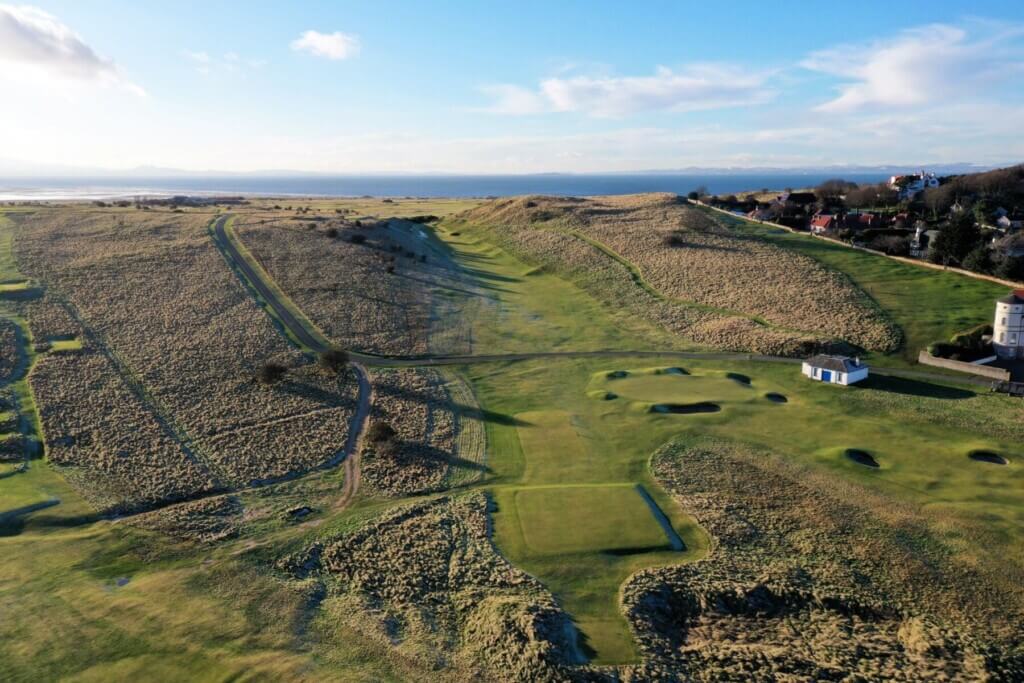
Gullane No. 1 provides an ideal closing round. From the elevated holes on Gullane Hill, the views across the Firth of Forth are expansive, and the course itself delivers a proper strategic test — well-bunkered, subtly contoured, and in consistently fine condition. It’s a course that many international visitors overlook in favour of nearby Muirfield, and that’s their loss.
Beyond the Golf
What makes a 14-day circuit of Scotland worth doing — rather than simply booking a few rounds independently — is the time between courses. The Highland drive from Ayrshire, a full day at John O’Groats exploring the far north of the mainland, a guided tour of the Glenmorangie Distillery after your round at Royal Dornoch, and time in Edinburgh before departure. These are not filler days. They’re what separates a golf trip from a golf holiday.
Why Tee Times in Scotland Are Getting Harder to Secure
Demand for tee times at Scotland’s top links courses has increased significantly over the past decade, and the booking landscape has shifted as a result. Courses like Royal Dornoch, Prestwick, and Cruden Bay receive visitor enquiries from golfers all over the world. The best slots — morning weekend tee times, peak summer dates — are heavily contested well in advance.
Some clubs have responded by tightening allocations for independent visitors, prioritising members and recognised operators with established relationships. Others operate ballot systems or release times in narrow windows that require monitoring and quick action. For a golfer planning a trip from Australia, North America, or elsewhere, building a two-week Scotland itinerary with eight confirmed tee times at top-tier courses is not a straightforward exercise.
Coastal weather adds another layer of complexity. A course that appears available may not be playable, and rescheduling a single round as an independent traveller, particularly across a tight itinerary, can unravel carefully laid plans quickly.
The Practical Case for Travelling With a Small Group Tour
Operators with long-standing relationships at Scotland’s top clubs carry access that individual travellers simply cannot replicate. Blocked allocations, preferred tee time windows, and confirmed forecaddie arrangements are negotiated well in advance, and held on the basis of established trust with each club.
Travelling as part of a small, well-managed group of 20 also changes the dynamic at the course itself. A group that arrives prepared, plays at pace, and understands links etiquette is welcomed back. That reputation, built over years, is what underpins guaranteed access at venues that would otherwise require significant lead time and persistence to book independently.
Beyond access, the logistics argument is straightforward. Private coach transfers between courses, porterage, pre-arranged starting times, and a host who manages the day-to-day removes the mental overhead that independent travel demands. You arrive at the first tee ready to play, not recovering from an hour on the phone trying to confirm a transfer or sort out a booking discrepancy. For a 14-day circuit covering four regions of Scotland and eight courses, that matters considerably.
2027 Scotland Golf Tour — 19 July to 1 August
Voyages.golf is running a fully escorted 14-day Scotland golf tour in July 2027, covering eight courses across Ayrshire, the Highlands, Aberdeenshire, and East Lothian. The group is capped at 20 golfers, with guaranteed tee times, private coach transport, forecaddies where required, and hand-picked accommodation throughout. Luxury accommodation includes Marine Troon, the Royal Golf Hotel Dornoch, Marcliffe House, and The Scotsman Hotel in Edinburgh. The tour departs Edinburgh on 19 July, immediately after The Open Championship at St Andrews, and can be booked independently of that event.
View the full itinerary and pricing at voyages.golf/escorted-tour/scotland-golf-tour-2027