
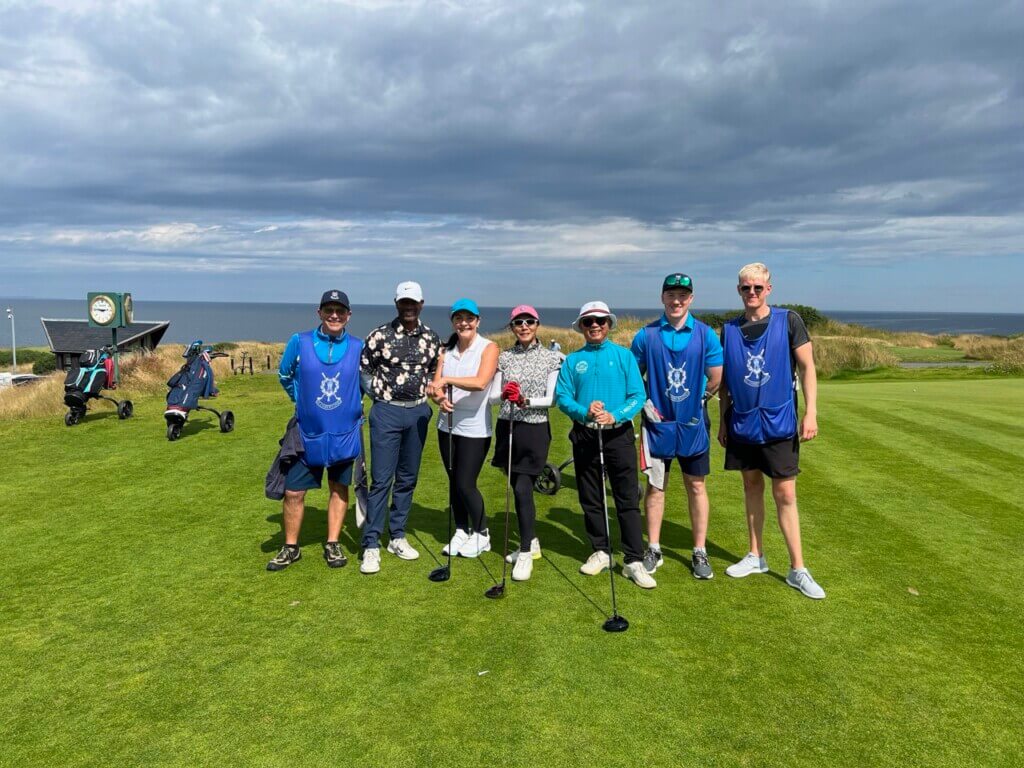
The Ultimate Guide to Golf Caddies in the UK & Ireland
5 minute read | Golf Travel Advice | Voyages.golf
If you’ve played links golf in the UK or Ireland, you’ll know the caddie is not a luxury add-on. On many of the best courses in the world, a caddie is the difference between a good round and a great one, and on some, they’re not optional.
This guide covers everything you need to know: the types of caddies you’ll encounter, where they’re compulsory, what they cost, and how to make the most of the experience.
What Does a Caddie Actually Do?
The role varies significantly by course and individual, but at a minimum, a caddie carries your bag and provides yardages. At the best courses, they do considerably more.
An experienced links caddie will read the wind before you do, understand the subtle breaks on greens that aren’t immediately visible, and know where to miss, which on a course like Ballybunion or Royal Portrush is often as important as knowing where to aim.
Beyond the practical, a good caddie adds genuine local context. Many have worked the same course for 10, 20, or 30 years. That knowledge is not something a rangefinder can replicate.
Types of Caddies: What You’ll Encounter
1. Caddie (Full Carry)
This is the traditional arrangement. Your caddie carries your bag for the full round, walks with you, and is available for every shot decision.
Full carry caddies are standard at the top links courses in Ireland and Scotland. At venues like Royal County Down, Lahinch, and Carnoustie, this is exactly what’s on offer when you request a caddie.
Best for: Golfers who want an immersive, course intelligent experience. Those playing a bucket list course for the first time.
2. Forecaddie
A forecaddie walks ahead of the group rather than alongside individual players. They spot balls, manage pace of play, and provide course guidance, but they don’t carry bags.
In a forecaddie arrangement, golfers typically use trolleys or push carts. One forecaddie usually serves a group of two to four players.
This model is increasingly common at busy links courses where course management is a priority. Several high profile venues in Ireland now require groups to take a forecaddie, not as an optional upgrade, but as a condition of play.
Best for: Groups of three or four who want course guidance without the cost of individual caddies. Courses managing pace effectively during peak season.
3. Buggy or Trolley Only (No Caddie Available)
Some courses, particularly in England, operate without a caddie programme. This is especially common at heathland and parkland courses, where the terrain doesn’t demand the same navigational knowledge as links golf.
At these venues, GPS devices, course planners, or self navigation are standard. You will also encounter more buggies to drive on parkland courses.
4. Shared Caddies
On a tight budget, or where caddie availability is limited, two players will occasionally share one caddie. One bag is carried; the other goes on a trolley. The caddie switches between players at each shot.
Shared caddies are more common during busy summer periods or on courses where caddie numbers are limited.

Where Caddies Are Compulsory
This is where many visiting golfers are caught off guard. At several courses in Ireland and Scotland, caddies or at minimum forecaddies are not optional.
Ireland
Lahinch Golf Club requires groups to take a forecaddie during peak season. It’s a firm policy, built around pace of play management on one of the most visited links in the country.
Ballybunion Golf Club strongly encourages caddies on both the Old and Cashen courses. Navigating Ballybunion without local knowledge is challenging; the Old Course in particular has blind tee shots and complex green contours that benefit from experienced caddie input.
Old Head Golf Links has historically required a forecaddie for all visitors. The course sits on a dramatic clifftop peninsula with complex routing. The forecaddie requirement is both a pace management tool and a practical necessity.
Waterville Golf Links does not mandate caddies, but their availability is well organised, and the course strongly recommends them for first time visitors.
Scotland and the UK
St Andrews Links (Old Course) does not require caddies, but they are deeply embedded in the experience. The Old Course requires a ballot or pre arranged tee time for visitors, and many serious golfers pair this with a caddie almost as a matter of course.
Royal Dornoch encourages caddies, particularly for first time visitors. The course routing and green complexes reward local knowledge.
Kingsbarns Golf Links operates a well regarded caddie programme and strongly recommends caddies for visitors unfamiliar with the course.
Turnberry (Ailsa Course) and Royal Troon offer caddie services and encourage, but do not mandate, their use for visiting golfers.
The general rule: at the top tier links venues in Ireland and Scotland, assume a caddie or forecaddie will be part of the day. Check ahead, because policies change and peak season requirements may differ from off season visits.
What Does a Caddie Cost?
Caddie fees vary by course, region, and type of arrangement. The figures below reflect current typical ranges. Always confirm directly with the course or through your operator.
| Arrangement | Typical Range (per bag or group) |
|---|---|
| Full carry caddie (Ireland) | €80 to €130 |
| Full carry caddie (Scotland and UK) | £60 to £120 |
| Forecaddie (group rate) | €60 to €100 per group |
| Shared caddie | Approximately 60 to 70% of full rate |
These fees do not include gratuity, which is expected and meaningful.
Tipping: What’s Expected
Tipping your caddie is standard practice throughout the UK and Ireland. It is not a gesture, it is part of the culture, and caddies rely on it.
Guideline for a satisfactory round:
- Ireland: €20 to €40 per player, per round
- Scotland and UK: £20 to £40 per player, per round
For an exceptional caddie, one who genuinely contributed to your round, read putts well, kept you calm on a difficult course, or added real entertainment value, tip toward the higher end or beyond it. If you’re on a group trip and your forecaddie did the job properly, a group tip of €80 to €120 is appropriate.
Cash is strongly preferred. Carry local currency for caddie gratuities.
A practical note for tours: On a Voyages.golf escorted tour, we brief all clients on tipping etiquette ahead of each round. It’s part of how we ensure the experience works well for everyone, including the caddies.
Getting the Most From Your Caddie
A caddie is only as useful as the golfer allows them to be. A few practical points:
Tell them your game. Let your caddie know your typical miss, how far you actually hit each club (not the career best), and whether you prefer to make your own decisions or want more active guidance. This conversation should happen on the first tee, not the fifth hole. It is advisable to tell them how you’d like help, whether it’s distance measurements, general course management, reading putts or simply cleaning clubs and finding your ball.
Ask about the course. Particularly on a course you’re playing for the first time, ask your caddie about the routing, the trickiest greens, and where not to miss. Most experienced caddies are generous with this information if you ask directly and they will understand your ability after a couple of holes.
Trust local knowledge on wind. Links courses in Ireland and Scotland can play very differently depending on wind direction and strength. A caddie who has played the same course in every condition for 20 years has a practical advantage that no GPS app can match.
Don’t override them constantly. If you’ve paid for a caddie and ignored every piece of advice they’ve offered, you haven’t really used a caddie. Alternatively, if you feel their putting advice isn’t tailored to you, it doesn’t meant they read it wrong – often it means the putt wasn’t hit at the right tempo. However, we are all human and can make mistakes.
Should You Always Take a Caddie?
Not necessarily. On a course you know well, or at a venue where the caddie programme is limited, a trolley round is perfectly fine.
But for bucket list links courses, Royal County Down, Ballybunion, Lahinch, the Old Course at St Andrews, Royal Dornoch, a caddie changes the experience in a way that is difficult to replicate with a scorecard and a rangefinder.
For golfers playing these courses once in their life, or once on this trip, the cost is straightforward to justify. The caddie is part of what makes links golf in the UK and Ireland what it is.
Planning a Trip Where Caddies Are Part of the Experience?
At Voyages.golf, caddie arrangements, whether compulsory, strongly recommended, or simply part of the experience, are handled as part of tour logistics. We coordinate directly with courses on caddie availability, brief clients ahead of each round, and ensure tipping guidance is provided clearly before arrival.
If you’re planning a golf trip to Ireland or Scotland and want the experience managed properly from tee time to 19th hole, get in touch with our team or browse our small group golf tours.
Voyages.golf specialises in small group escorted golf tours to Ireland, Scotland, Portugal, Spain, and beyond. Every tour is founder led and built around access to the best courses, properly organised.